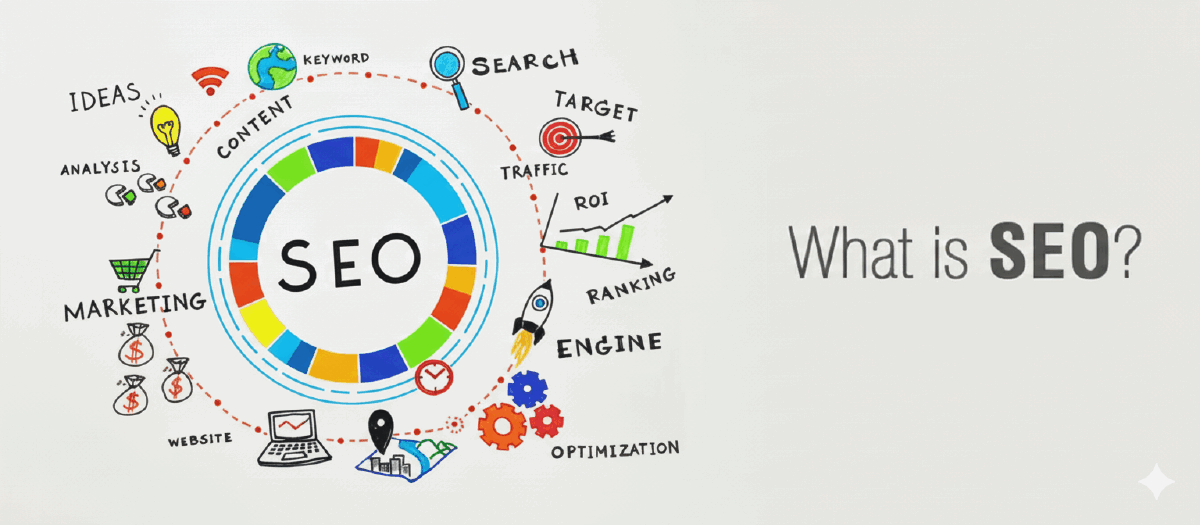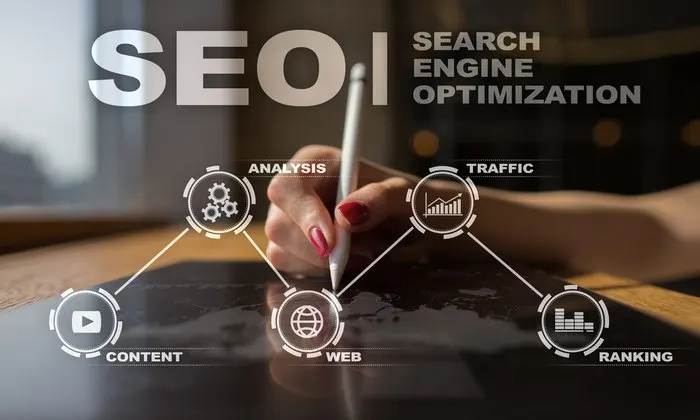
SEO is a strategy for improving how visible your website is in search results. A useful way to picture it: an essay competition, where your page competes for the top spot against everyone else who wrote about the same subject.
Judges in a competition assess entries on relevance, a clear title, logical flow, an effective summary and readability. Search engines assess pages on remarkably similar criteria:
- Clear, engaging titles
- Concise, accurate meta descriptions
- A logical content structure using heading tags (H1–H6)
- Keywords placed naturally, without stuffing
- A responsive design that works on every device
- Page speed that does not test the reader's patience
Together those form the backbone of effective SEO. Search engines - and increasingly social platforms and answer engines - continuously crawl and index the web to serve relevant results, and that indexing directly determines how prominently you appear.
SEO is not only about chasing rankings. It is about making sure your site speaks the language of search engines while genuinely connecting with the people you want to reach.
The discipline splits into two halves: On-Page SEO and Off-Page SEO.
On-Page SEO
On-page SEO covers everything you control on the page itself. Think of it as the foundation - without it, nothing above ground stays standing for long.
Keywords
Use phrases your audience is actually likely to search for, and place them naturally in the content, titles and headings. Do not stuff them. As a rough guide, keep keyword usage well under 10% of total words - and prioritise reading naturally over hitting any number.
<meta name="keywords" content="{keywords}" />Google has ignored the keywords meta tag for well over a decade. It costs nothing to include and some smaller engines still read it, but do not expect it to influence your ranking. Your real keyword work happens in the title, headings and body copy.
Title tags
Write compelling titles of roughly 50–60 characters so they are not truncated in results. Put the distinctive part first - brand names at the front waste the most valuable space you have.
<title>{pageTitle}</title>
<meta property="og:title" content="{pageTitle}" />
<meta name="twitter:title" content="{pageTitle}" />
Meta descriptions
A concise summary of 155–160 characters that describes the page and includes your primary terms. It rarely affects ranking directly, but it heavily influences whether anyone clicks - which does.
<meta name="description" content="{description}" />
<meta property="og:description" content="{description}" />
<meta name="twitter:description" content="{description}" />
URL structure
Use descriptive, concise, keyword-relevant URLs that clearly represent the page.
https://website.com/how-to-rank-on-googleContent structure
Use heading tags logically. Every page should have exactly one H1 as its main title, with H2 and H3 tags forming a real hierarchy underneath. Headings are structure, not styling - never pick one because of how big it looks.
Internal linking
Connect related pages with descriptive link text. This improves navigation, distributes authority across your site, and helps crawlers discover pages they would otherwise reach slowly or not at all.
Sitemaps
Provide an XML sitemap for search engines and, where it helps, an HTML one for users. It is the cheapest possible way to make sure nothing important goes unindexed.
Images and media
Every meaningful image needs descriptive alt text - it serves accessibility first and image search second. Use modern formats, set explicit dimensions to prevent layout shift, and lazy-load anything below the fold.
Core Web Vitals
Loading, interactivity and visual stability are measured signals, not vague advice. They are also the metrics your users feel most directly, which makes them the rare optimisation that helps both audiences at once.
Off-Page SEO
Off-page SEO covers everything that happens away from your site to build authority, trust and credibility. It is your online reputation - and reputation is harder to fake than markup.
Link building
Earn quality backlinks from reputable sites. They act as votes of confidence, drive referral traffic, and signal authority. A handful of genuinely relevant links outperform hundreds of low-quality ones, and purchased link schemes are actively penalised.
High-quality content
Produce something valuable enough that people link to it without being asked. This is slower than any tactic and the only one that compounds.
Off-site engagement
Promote your work through social platforms, forums and communities where your audience actually spends time. Visibility and brand recognition feed back into direct search demand for your name.
Duplicate content monitoring
Make sure your content is unique, and watch for it being republished elsewhere without attribution. Duplicate content splits ranking signals and damages credibility.
Guest writing
Contributing to external publications expands your reach, demonstrates expertise, and earns links from places you could not otherwise reach - as long as the writing is genuinely good rather than a link wrapped in filler.
Bringing them together
| On-Page SEO | Off-Page SEO | |
|---|---|---|
| What it is | Everything on your own site | Everything happening elsewhere |
| Control | Complete | Influence only |
| Main levers | Titles, headings, content, speed, structure | Backlinks, mentions, reputation |
| Speed of effect | Days to weeks | Months |
| Signals | Relevance and quality | Authority and trust |
On-page work makes your content understandable. Off-page work makes it credible. Neither one alone gets you very far - but together they compound, and they keep compounding long after any individual tactic has stopped working.