SEO for AI Search Engines: ChatGPT, Google SGE, Bing AI, and Beyond
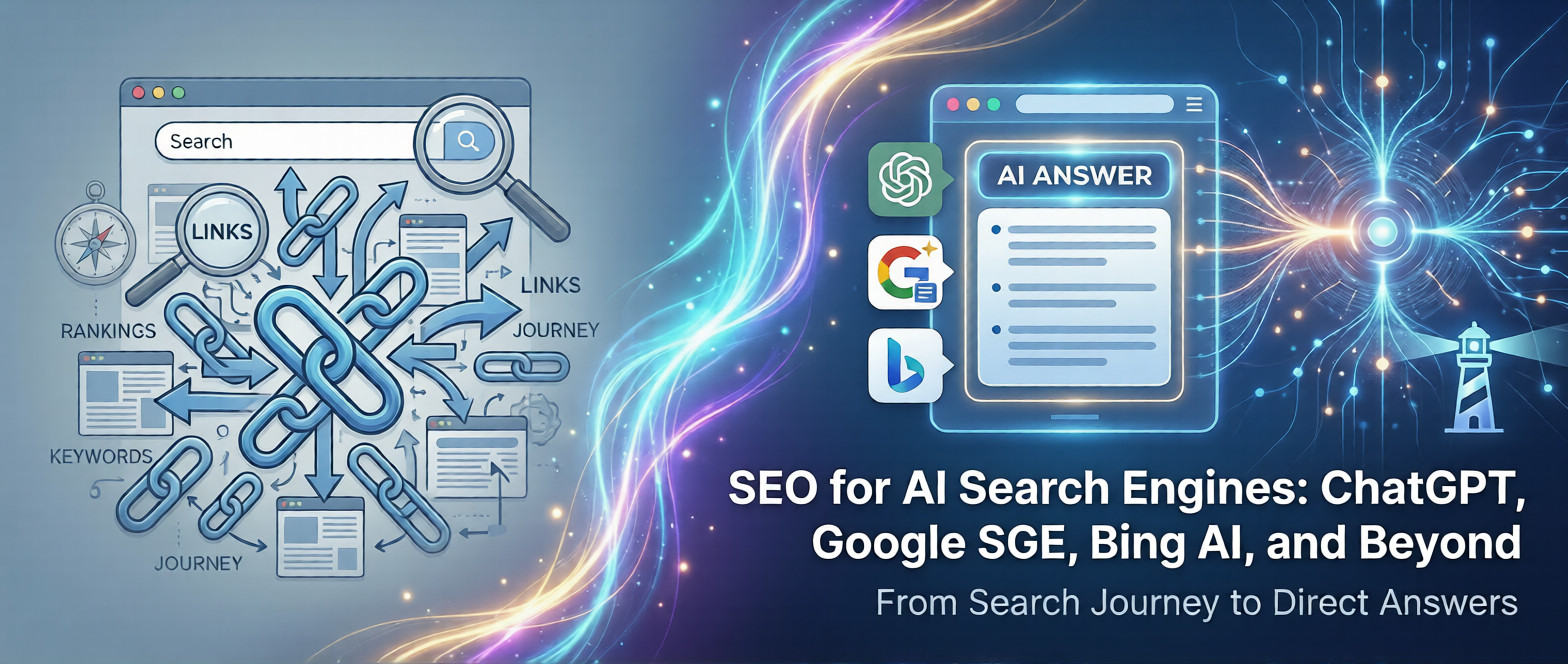
🔍 Introduction: Search Is No Longer a Journey - It's an Answer
For years, finding information online felt like a step-by-step journey:
- You opened Google
- Typed a question
- Scrolled through links
- Clicked a few websites
- Compared information
- And finally decided what to trust
That flow shaped how we used the internet - and how SEO worked.
But today, something fundamental has changed.
Now, when you ask:
- "Which insurance is best for me?"
- "How do I improve website performance?"
- "Is green tea good before sleep?"
You're often greeted with a single, clear answer - written by AI - before you even scroll.
This shift is powered by AI search engines that don't just list websites, but read, understand, and explain information for you.
SEO is no longer about being one link among ten. It's about becoming the explanation AI chooses to trust.
This blog breaks down what SEO looks like in the age of AI search engines - simply, clearly, and without technical jargon - so anyone can understand what's changing and how to adapt.
🤖 What Are AI Search Engines (In Simple Terms)?
Traditional search engines focused on finding pages. AI search engines focus on answering questions.
Instead of saying:
"Here are some links. You figure it out."
They say:
"Here's the answer. I've already figured it out for you."
The biggest platforms driving this change today are:
- ChatGPT – conversational answers and explanations
- Google SGE – AI summaries at the top of Google Search
- Bing AI – AI-powered answers with source citations
They don't just scan keywords - they understand meaning, intent, and context.
🚨 Why Traditional SEO Alone Is No Longer Enough
Classic SEO strategies focused on:
- Keyword placement
- Backlinks
- Meta tags
- Ranking positions
But AI search engines don't think in rankings.
They think in questions like:
- Does this content clearly answer the question?
- Is this easy for a beginner to understand?
- Does this sound trustworthy and balanced?
If content is confusing, shallow, or written only to please algorithms - AI skips it.
🧠 How AI Decides Which Content Becomes the Answer
This is where modern SEO really changes.
AI doesn't "rank pages." It selects explanations.
Here's what it looks for.
1️⃣ Intent Matters More Than Keywords
AI focuses on what the user wants to know, not the exact words they typed.
Example:
Search - "Is green tea good at night?"
AI looks for content that explains:
- Caffeine effects
- Sleep impact
- Best time to drink it
- Safer alternatives
Not pages repeating the phrase "green tea night benefits" ten times.
2️⃣ Clarity Beats Authority
A small blog written clearly can outperform a big brand if:
- The explanation is simpler
- The structure is better
- The tone feels human
AI prefers:
"Let me explain this clearly"
over
"Let me sound smart."
3️⃣ Structure Helps AI Understand Faster
AI loves content with:
- Clear headings
- Bullet points
- Short paragraphs
- Logical flow
If humans can skim it easily - AI can understand it better too.
4️⃣ Depth Without Fluff Builds Trust
AI avoids:
- Thin articles
- Generic advice
- Rewritten definitions
It prefers content that explains:
- Why something works
- When it doesn't
- Real-world trade-offs
That's how AI detects real understanding.
🔍 SEO for ChatGPT: How Do You Appear in AI Answers?
ChatGPT doesn't rank websites like Google.
It learns from patterns in high-quality content.
To improve visibility:
- Write evergreen educational content
- Explain concepts from first principles
- Avoid clickbait
- Keep tone neutral and clear
Ask yourself:
"If an AI had to explain this topic to a beginner, would my article help?"
If yes - you're on the right path.
🌐 SEO for Google SGE: Winning the AI Overview
Google SGE shows AI-generated summaries before traditional results.
To be included:
- Answer the main question early
- Use plain-language definitions
- Break ideas into steps or lists
- Avoid long, fluffy intros
Tip: Write sections that can stand alone as complete answers. That's what SGE pulls from.
🔗 SEO for Bing AI: Credibility Comes First
Bing AI often includes citations under its answers.
To improve chances:
- Be factual and balanced
- Avoid exaggerated claims
- Update content regularly
- Use consistent terminology
Trust is the biggest ranking factor here.
🧩 The New SEO Formula (Easy to Remember)
Clarity × Helpfulness × Trust = AI Visibility
Not keyword density. Not traffic hacks. But clear explanations that help real people.
✅ A Simple AI-SEO Checklist (For Anyone)
Before publishing, ask:
- Does this answer a real question?
- Is the answer clear in the first 20%?
- Can a non-technical person understand it?
- Does it explain "why," not just "what"?
- Does it feel honest and calm?
If yes - AI search engines will notice.
🔮 The Future: SEO Becomes "Answer Engineering"
SEO is no longer about:
Chasing rankings.
It's about:
Designing the best possible answer.
The winners will be:
- Educators
- Clear thinkers
- Specialists
- Honest creators
Not content factories.
🧭 Final Thoughts: From Clicks to Confidence
AI search engines are not killing SEO.
They're removing noise - and amplifying value.
They reward content that:
- Respects the reader
- Explains instead of impressing
- Builds understanding instead of traffic alone
If you focus on helping people truly understand something, AI will help people find you.
The future of SEO doesn't belong to those who game algorithms. It belongs to those who explain the world better.