New Year, New UI: Building Smarter Interfaces with AI
The New Year doesn’t always begin with disruption or dramatic shifts.
Sometimes, it starts with cleaner abstractions, better tooling, and more intentional workflows.
AI has gradually become part of modern frontend engineering - not as a replacement for core skills, but as an efficiency layer in the development pipeline. As a UI developer working with component-driven architecture, responsive layouts, and design systems, I see AI as a tool that helps reduce boilerplate, surface edge cases earlier, and accelerate repetitive tasks like scaffolding components, refactoring styles, and validating accessibility.
By offloading mechanical work, AI creates more room to focus on what actually matters in frontend development: predictable state management, performance-conscious rendering, scalable CSS, and user experiences that remain consistent across devices and use cases.
🔄 From Writing More Code to Writing Better Code
I didn’t begin my journey with shortcuts or abstractions. Like many self-made developers, my foundation was built through repetition:
- Writing code line by line
- Breaking layouts and logic
- Debugging quietly, without quick answers
- Refining the same solution until it worked
That process shaped how I think about UI development.
AI doesn’t erase that experience. It builds on top of it.
Today, instead of investing time in repetitive UI patterns and boilerplate, AI helps offload mechanical work - allowing deeper focus on:
- Clean, predictable component structure
- Thoughtful UX and interaction details
- Debugging quietly, without quick answers
- Long-term maintainability and scalability
"Progress, in frontend engineering, isn’t about writing more code.
It’s about writing better code."
That’s real progress.
🧩 Practical Use Cases That Actually Matter
✅ Building UI Without Burning Out
Dashboards, forms, and data-heavy tables are essential - but they’re also repetitive by nature. AI helps by scaffolding base layouts and component structures, allowing time and energy to be spent where it matters most: refining interactions, improving accessibility, and polishing user flows instead of rebuilding the same patterns repeatedly.
Efficiency isn’t just about moving faster.
It’s about building in a way that’s sustainable over time.
✅ Design to Code, With Fewer Gaps
Misalignment between design and development is a common source of friction.
AI helps reduce that gap by translating design intent into code with greater accuracy - preserving spacing, hierarchy, and component logic more consistently.
The result is fewer handoff issues, less rework, and smoother collaboration.
Less noise. More alignment.
✅ Debugging Without Ego
Errors are part of engineering. What matters is how quickly and clearly they’re understood.
AI helps by breaking down errors into understandable explanations - without pressure, assumptions, or judgment. This makes debugging more focused, more efficient, and less mentally draining.
For introverted developers, this kind of quiet, reliable support is more valuable than we often acknowledge.
🎨 Consistency Over Complexity
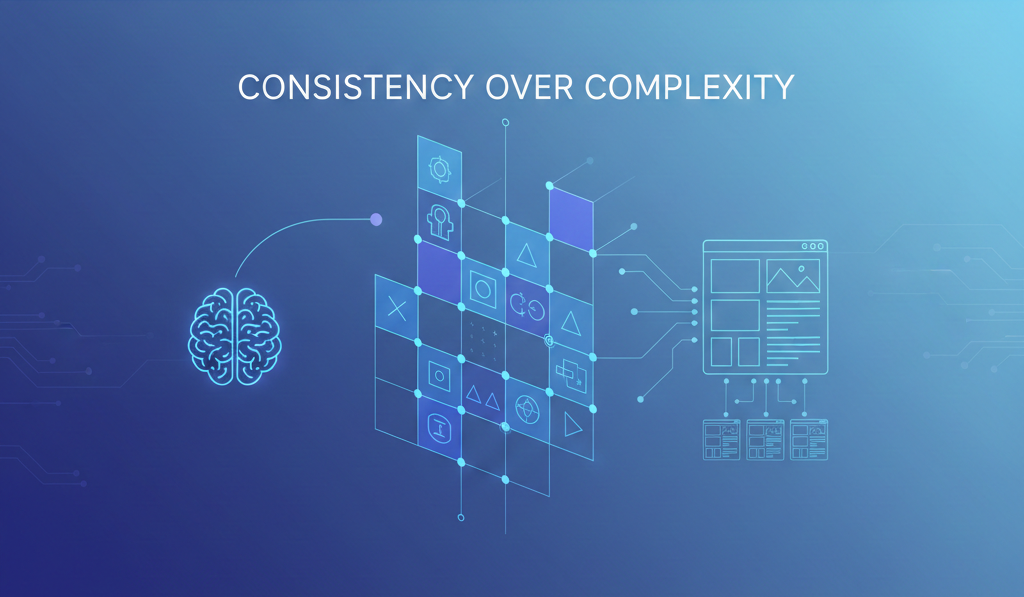
Well-designed interfaces prioritize consistency over novelty.
At scale, UI success depends less on visual flair and more on predictable patterns, clear hierarchy, and disciplined reuse. AI supports this by reinforcing:
- Design system constraints and component contracts
- Typography scales and layout rhythm
- Spacing and alignment rules across responsive breakpoints
The result is an interface that feels stable and intuitive - because users don’t have to relearn behavior with every screen.
♿ Accessibility Is a Responsibility, Not a Feature
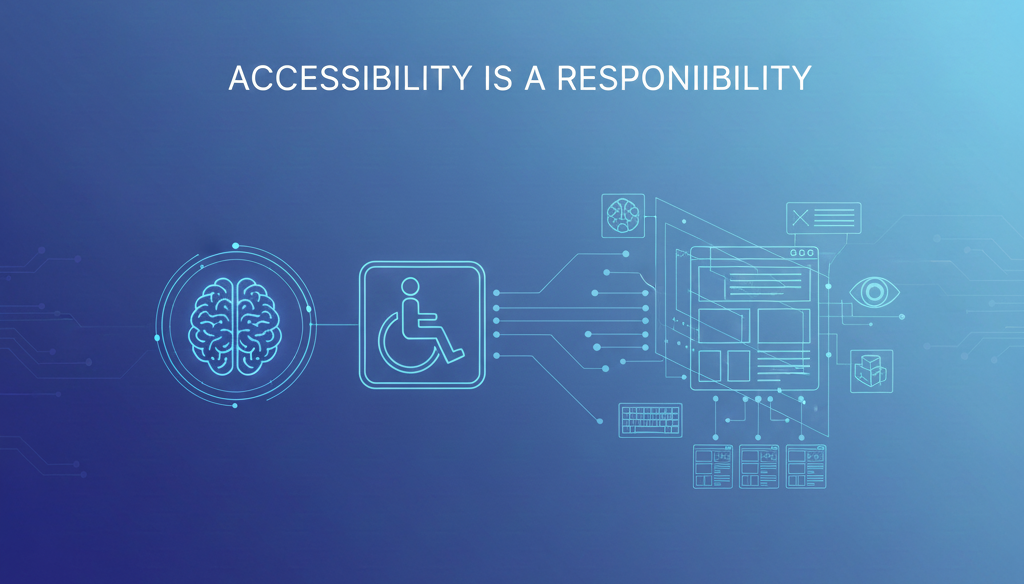
Accessibility is not an enhancement - it’s a baseline requirement.
AI helps surface accessibility issues early in the pipeline, from contrast and focus management to semantic structure and keyboard navigation. Addressing these concerns upfront reduces downstream rework and ensures inclusivity is built into the system, not layered on afterward.
This is the standard modern UI engineering should operate at.
⚙️ A Calm, Effective UI Workflow
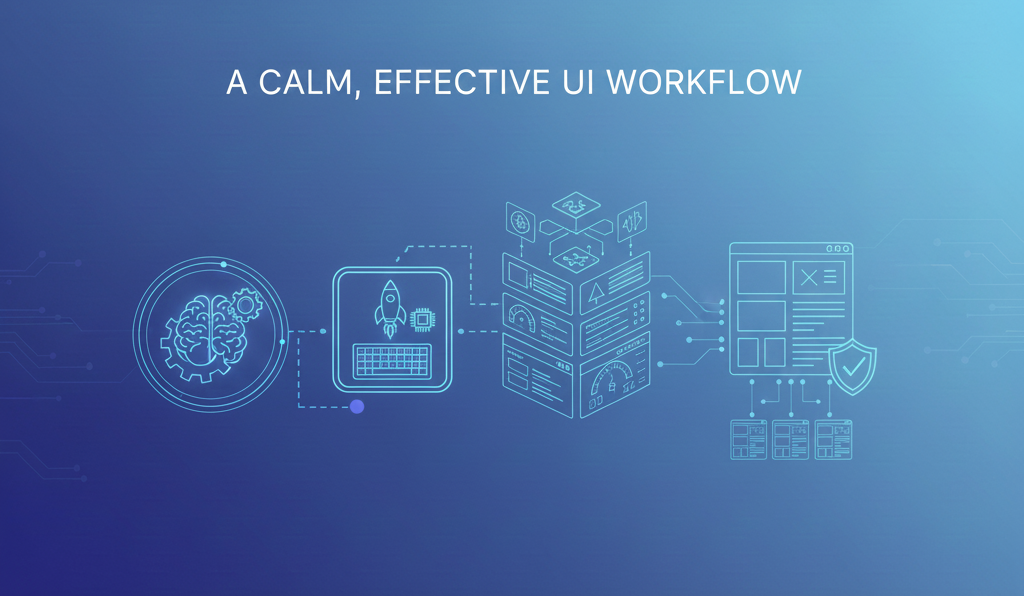
A mature UI workflow values clarity over speed:
- Define the problem and user constraints precisely
- Use AI to accelerate repetitive or mechanical tasks
- Apply engineering judgment to refine structure, interactions, and performance
- Ship systems that are resilient, testable, and maintainable
No urgency-driven decisions.
No shortcuts that accumulate debt.
Just consistent execution.
🧠 The Real Shift Is Internal
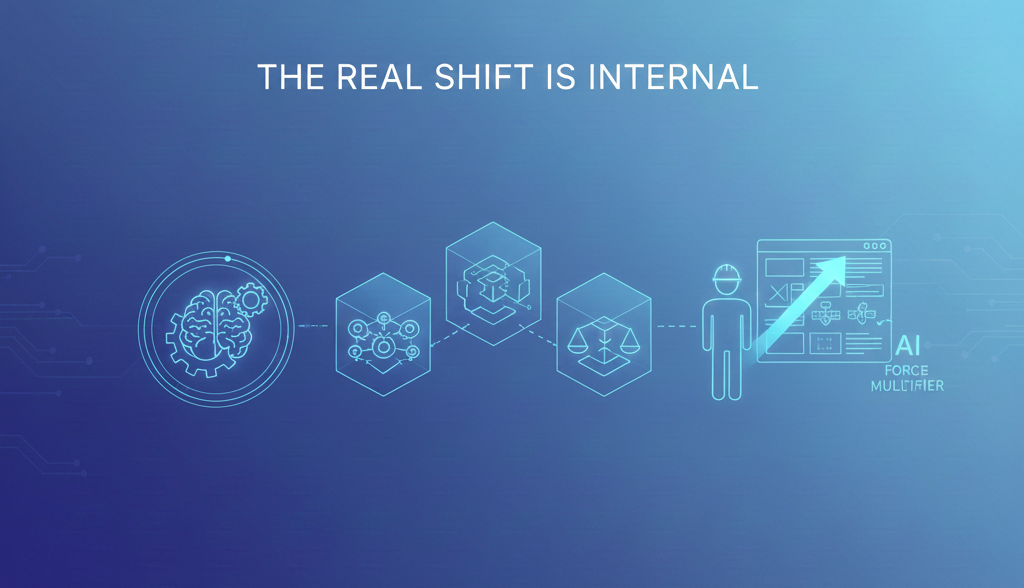
AI will not replace engineers who:
- Think in systems
- Design for scale and change
- Make deliberate trade-offs
At a senior level, the value lies in decision-making, not output volume. AI is a force multiplier—but only when guided by architectural intent and engineering discipline.
🌟 New Year Reflection
This year, the focus isn’t on adopting every new tool.
It’s on reinforcing fundamentals:
- Strong component architecture
- Clear design-system ownership
- Clean, maintainable frontend codebases
AI supports this direction by reducing noise and enabling focus on what compounds over time.
🔚 Final Thought
Leadership in UI engineering isn’t defined by how quickly we adopt AI, but by how intentionally we apply it.
Used well, AI doesn’t replace judgment—it amplifies it. It reduces friction in repetitive work, surfaces risks earlier, and creates space for engineers to focus on architecture, accessibility, performance, and long-term maintainability. Used poorly, it simply accelerates noise.
In this New Year, the goal is clear:
to integrate AI where it strengthens systems, to question it where it weakens clarity, and to remain accountable for every technical decision it influences.
The future of frontend engineering belongs to teams who treat AI not as a shortcut, but as infrastructure—quietly improving workflows, stabilizing interfaces, and enabling UI platforms that scale with confidence and integrity.
That’s how AI delivers real value.
And that’s how UI engineering continues to evolve responsibly.